The natural evolution of PRP in regenerative medicine
By Dr. Athanasios Garavelas
What makes a treatment truly modern? It is not only the use of new technology, but also the ability to harness the body’s own natural mechanisms in a more comprehensive way.
In regenerative medicine, PRP marked an important step in this direction. The use of platelets and growth factors derived from the patient’s own blood opened the way for more biological and personalized therapeutic approaches.
Exosomes by Ovagenesis continues this evolution. It does not replace PRP; it expands upon it. Its aim is to utilize not only platelets, but also a broader range of biologically active plasma components, including exosomes, growth factors, and key proteins involved in the body’s natural tissue repair processes.
What are exosomes and why are they considered so important?
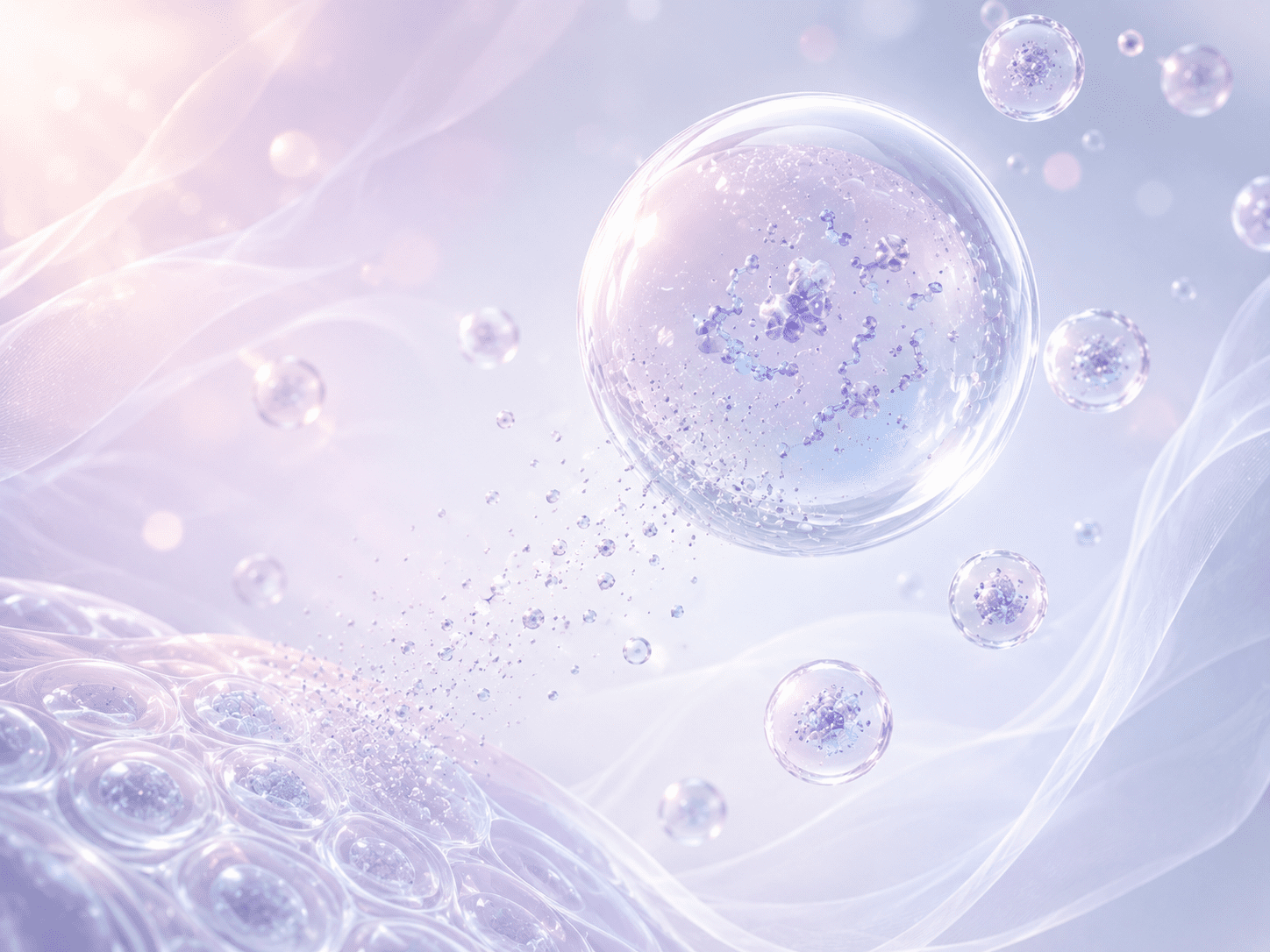
Exosomes are microscopic vesicles produced by cells that function as carriers of communication between them. They transport biological signals, proteins, and other regulatory factors associated with cellular function and tissue repair.
Their importance lies in the fact that they are not merely a “component” of blood, but part of a more complex mechanism of biological coordination. The Ovagenesis method is designed to preserve and concentrate these elements, creating a richer autologous product.
How does it differ from conventional PRP?
Conventional PRP focuses mainly on concentrating platelets. The Ovagenesis approach is broader, as it processes both PRP and PPP, meaning platelet-rich plasma as well as platelet-poor plasma, which still contains valuable biological components.
This is particularly significant because circulating exosomes and soluble growth factors are found in PPP and should not logically be overlooked. As a result, the final product is not based solely on platelet density, but on a more comprehensive biological profile.
In simple terms, PRP represented a defining beginning. The Ovagenesis method is the next step in that same logic.
How is this greater biological concentration achieved?
The process is based on the use of a specialized 15 kDa membrane, which allows water and very small molecules to pass through while retaining and concentrating larger biological elements.
In this way, the final product preserves:
- exosomes and microvesicles,
- platelets,
- growth factors,
- cytokines,
- important plasma proteins.
The result is an autologous concentrate with a more complex biological composition, designed for immediate use within the treatment session.
Why does it matter that it comes from the patient’s own blood?
The autologous nature of the method is one of its key advantages. The material used comes from the patient’s own body and is not a foreign biological substance.
This is aligned with the modern philosophy of regenerative medicine, which seeks to support and guide the body’s natural capacities rather than replace them.
How is the procedure performed?
The method begins with the collection of approximately 60 mL of blood. This is followed by centrifugation and then specialized filtration in order to produce the final concentrated product.
The overall process is usually completed within approximately 15–20 minutes, and the final product is applied immediately, typically within the next 30 minutes after preparation. It is not intended for storage or later use.
Are multiple sessions required?
The initial approach is usually based on one session. The need for repetition is assessed on an individualized basis, depending on the patient’s response and clinical evaluation.
In some cases, a second application may be discussed after a few weeks, but this is not an automatic or mandatory part of the protocol.
When can results be expected?
As is generally the case with biological and regenerative therapies, improvement does not appear instantly. The effect develops gradually, and results are expected over the course of weeks, depending on the indication and the individual characteristics of each patient.
This is an important point: regenerative medicine does not promise “instant miracles,” but is based on biological processes that require time to become clinically evident.
Why is the Ovagenesis method of particular interest?
The value of the method lies in the fact that it reflects a more mature understanding of autologous regenerative therapy. It does not focus exclusively on a single factor, but on the overall biological information that can be utilized from the patient’s own blood.
This approach aims to reduce the loss of useful elements, enhance the therapeutic potential of the final product, and provide a more comprehensive tool within appropriately selected treatment protocols.
Conclusion
Exosomes by Ovagenesis represents a meaningful evolution in the field of autologous biological therapies. It is based on the experience and rationale of PRP, but takes a step further by utilizing a broader spectrum of biologically active components.
The evolution of medicine does not mean abandoning what we already know. It means understanding it more deeply and using it more effectively.
Athanasios Garavelas
Obstetrician – Gynecologist
Specialist in Infertility & Assisted Reproduction
This article is intended for informational purposes only and does not replace professional medical advice or diagnosis. For a personalized evaluation, please consult Dr. Athanasios Garavelas.