
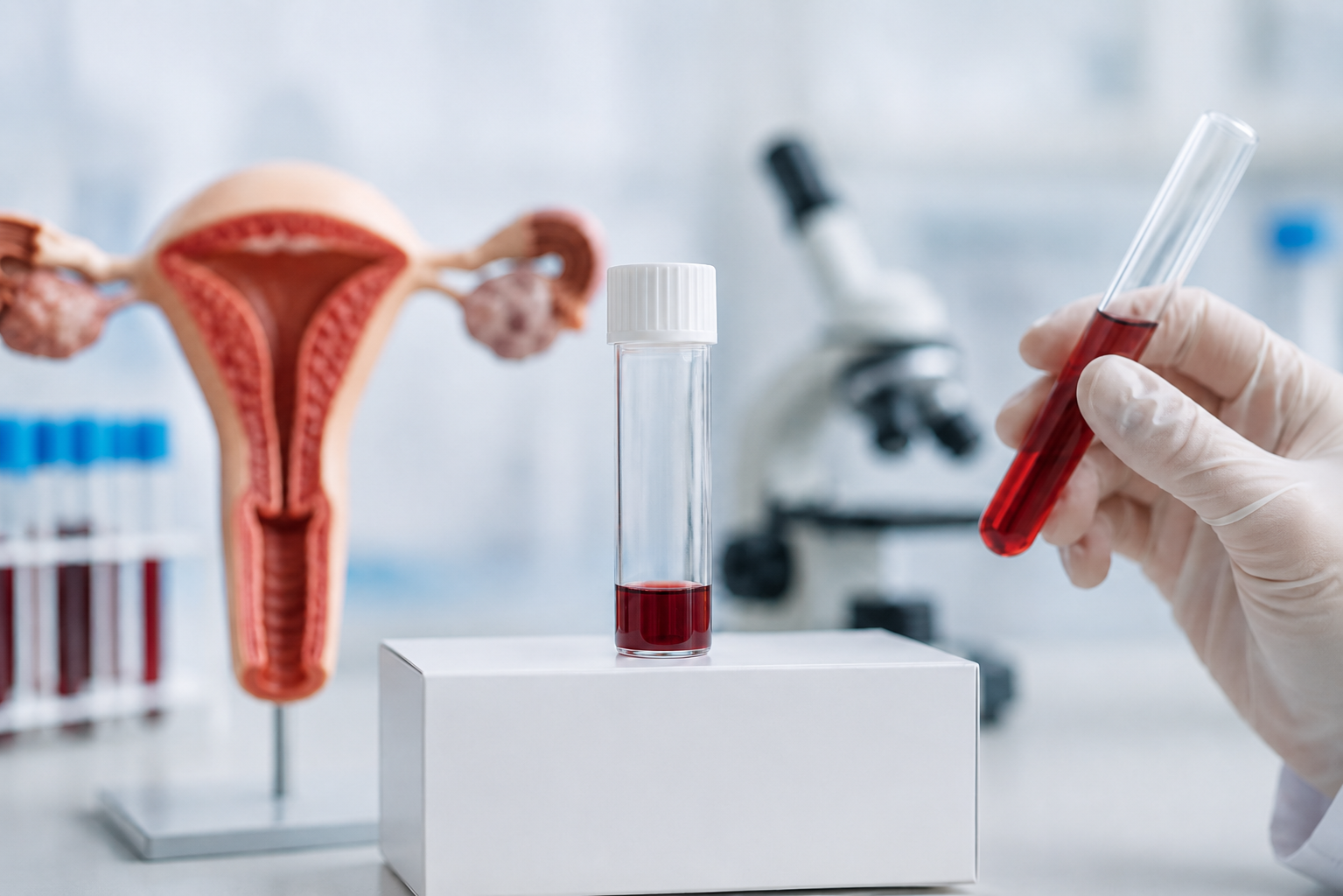
Diagnosis of Endometriosis with a Simple Blood Test, Without Surgery
Endometriosis is one of the most common gynecological conditions and, at the same time, one of the most difficult to diagnose. Many women live for years with severe period pain, chronic pelvic pain, pain during sexual intercourse, gastrointestinal symptoms, or difficulty conceiving, without knowing that the underlying cause may be endometriosis.
Until recently, definitive confirmation of endometriosis was mainly associated with laparoscopy, a surgical procedure that allows the physician to identify possible endometriotic lesions and, when necessary, obtain tissue for histological examination.
Today, medical technology offers new possibilities in the investigation of endometriosis. At Ovagenesis, we offer a new, modern, non-invasive endometriosis test, performed through a simple blood draw at our clinic. The test does not require surgery, anesthesia, or hospitalization and can provide valuable diagnostic information as part of a comprehensive medical evaluation.
What is Endometriosis?
Endometriosis is a chronic inflammatory condition in which tissue similar to the endometrium grows outside the uterus. It may be found on the ovaries, fallopian tubes, peritoneum, bowel, bladder, or other areas of the pelvis.
Symptoms vary significantly from woman to woman. Some women experience severe pain, others mainly face difficulty conceiving, while in some cases the symptoms are mild, atypical, or confused with gastrointestinal or urinary disorders.
Symptoms of Endometriosis
Endometriosis may cause:
-
severe period pain,
-
chronic pelvic pain,
-
pain during sexual intercourse,
-
pain during urination or bowel movements, especially during menstruation,
-
bloating or gastrointestinal discomfort related to the menstrual cycle,
-
fatigue,
-
difficulty conceiving or infertility.
Period pain should not always be considered “normal,” especially when it affects daily life, work, sexual health, or a woman’s reproductive journey. In such cases, proper gynecological evaluation is important.
Why is Endometriosis Difficult to Diagnose?
The diagnosis of endometriosis may be delayed because its symptoms are not always clear. Pelvic pain, bowel discomfort, bloating, or pain during urination may be attributed to other conditions. At the same time, many women learn to live with pain without seeking medical help early.
For many years, laparoscopy was the main method for definitive confirmation of endometriosis. This method remains important, particularly when therapeutic intervention is also required. However, as a surgical procedure, it involves preparation, anesthesia, recovery time, and physical burden.
The need for simpler, less invasive, and more accessible diagnostic solutions is significant. In this context, new non-invasive tests for endometriosis represent an important development.
The New Non-Invasive Endometriosis Test at Ovagenesis
At Ovagenesis, we offer a new non-invasive test for endometriosis, performed with a simple blood draw.
The process is short and patient-friendly:
-
A medical evaluation and detailed history are taken.
-
A blood sample is collected at our clinic.
-
The sample is sent to a specialized partner laboratory in Spain.
-
The results are assessed by the physician in combination with symptoms, medical history, and the overall clinical picture.
The blood-based endometriosis test does not replace medical judgment and is not used in isolation. It is a modern diagnostic tool that can support the diagnostic process and help guide the next steps.
Advantages of the Non-Invasive Endometriosis Test
No surgery required
The test is performed through a simple blood draw, without laparoscopy, when the physician considers it appropriate for the woman’s case.
No anesthesia or hospitalization
The blood sample is taken at the clinic, without anesthesia, hospital stay, or recovery time.
Less physical and emotional burden
For many women, the idea of a surgical procedure can cause anxiety or lead to postponing investigation. A non-invasive test can make the first step simpler and more accessible.
Supports earlier investigation
When the diagnostic process is easier, more women may seek help earlier. This is especially important in a condition that often remains undiagnosed for years.
Supports personalized care
The result is assessed together with the woman’s medical history, symptoms, clinical examination, and reproductive goals. This allows the physician to plan the next steps in a more targeted way.
Endometriosis and Fertility
Endometriosis can affect fertility, although this does not mean that every woman with endometriosis will have difficulty conceiving. In many cases, however, the condition is associated with infertility or delayed achievement of pregnancy.
Endometriosis may affect reproductive function in several ways. Chronic inflammation in the pelvis can disrupt the environment in which the ovaries, fallopian tubes, and endometrium function. In more advanced cases, adhesions or anatomical changes may affect ovulation, tubal function, or the meeting of the egg and sperm.
When endometriosis is located on the ovaries, it may be associated with endometriomas, which are cysts that may affect ovarian function. In addition, for women undergoing infertility evaluation or planning IVF treatment, the possibility of endometriosis should be assessed in a timely manner.
For this reason, the relationship between endometriosis and fertility requires careful and individualized assessment. A woman with severe period pain and difficulty conceiving should not treat these two issues as separate. They are often part of the same clinical picture and require comprehensive evaluation by a specialized physician.
The new non-invasive endometriosis test can contribute to the diagnostic investigation of women who are trying to conceive, particularly when symptoms or clinical suspicion of endometriosis are present. In this way, the physician can gain a more complete picture and guide the woman more accurately regarding the next steps, whether these involve further testing, treatment, or a fertility plan.
When Should You Discuss the Endometriosis Test?
The non-invasive endometriosis test may be useful for women who have symptoms suggestive of endometriosis or are undergoing infertility investigation.
It is worth discussing the test with your physician if you experience:
-
very severe period pain,
-
chronic pelvic pain,
-
pain during sexual intercourse,
-
pain during urination or bowel movements during menstruation,
-
bloating or gastrointestinal discomfort related to the menstrual cycle,
-
difficulty conceiving,
-
suspected endometriosis without a clear diagnosis,
-
a history of endometriomas or previous pelvic findings.
Early evaluation is particularly important for women who wish to become pregnant or are planning their reproductive journey.
A Modern Diagnostic Option for Women’s Health
Endometriosis is a complex condition that can affect quality of life, sexual health, and fertility. Because its symptoms are often mistakenly attributed to “normal” period pain or other disorders, proper investigation requires medical expertise, careful listening, and individualized evaluation.
The new non-invasive endometriosis test offered at Ovagenesis is an important step toward a more modern and patient-friendly diagnostic approach. It enables investigation through a simple blood draw, reducing the need for an invasive procedure solely for diagnostic purposes when this is medically appropriate.
The test result is always evaluated in combination with each woman’s history, symptoms, clinical picture, and personal goals. In this way, the test becomes part of a comprehensive medical approach focused on clarity, safety, and appropriate guidance.
Book Your Appointment at Ovagenesis
If severe period pain, chronic pelvic pain, or difficulty conceiving concerns you, it is worth seeking specialized medical evaluation.
At Ovagenesis, you can learn more about the new non-invasive endometriosis test and discuss with your physician whether it is suitable for your individual case.
Book your appointment and take a meaningful step toward a clearer understanding of your health and fertility.
Send Us a Message
Fill out the form below, and we’ll get back to you as soon as possible.